Subway Tiles vs Large Format Tiles: What Suits a Modern Kitchen?
You have three samples of tile on the bench, an accompanying benchtop swatch, and all of them appeal to you when lit by the showroom lights. You then envision it at home: a splashback that’s going to be there for 10 years and a floor that’s going to endure dropped pans and wet footprints year-round.
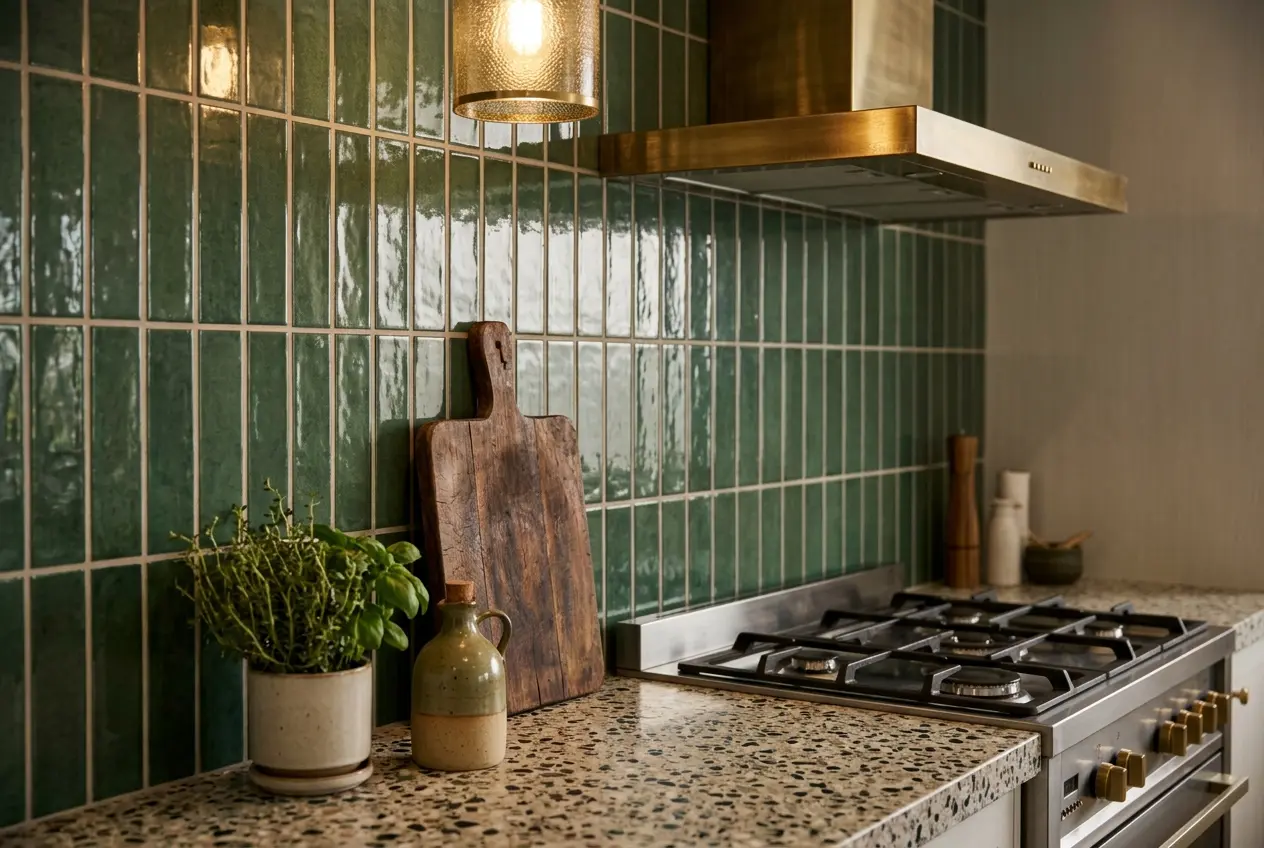
The case of choosing a one-piece floor tile versus subway tiles isn’t a matter of style; it’s more of a matter of how you carve out your kitchen time, where the tile will sit, and how easy you can make some spills to clean up. These are the steps you can take to select kitchen tiles in Melbourne that you won’t regret in 2 years.
Quick answer
- Subway tiles are the perfect choice for splashbacks, smaller kitchens, heritage and character homes, and those preferring a traditional style at an affordable price.
- The large format tiles are ideal for open plan kitchens and flooring; they offer few grout lines and a fresh and contemporary look.
- There should be a flat, firm base for a large format. In older buildings, Melbourne floors are frequently suitably roughened as a precondition of the leveling process.
- Some contemporary kitchens feature both at the back of the kitchen and on the floor, in large format.
Kitchen tiles Melbourne homeowners ask about most
What are subway tiles?
A subway tile is a small rectangle, the dimensions of which vary, but they are typically 75 x 150 mm. Typically, they are arranged in a brick pattern, although other patterns can be used, such as herringbone and vertical lines. The finishes available are gloss, matt, and handmade-look.
What are large format tiles?
Large format tends to be any size larger than about 600 x 600 mm up to 1200 x 600 mm and larger. Most of them are porcelain, and they’re quite large, so there will be fewer grout lines, and it will be a much smoother surface.
Subway tiles vs large format tiles side by side
| Subway tiles | Large format tiles | |
|---|---|---|
| Best for | Splashbacks, smaller kitchens, character homes | Floors, open plan kitchens, feature walls |
| Look | Classic, full of character | Smooth, seamless, modern |
| Grout lines | Many | Few |
| Cleaning | More grout to maintain | Easier to clean |
| Surface needed | Forgiving of uneven walls | Very flat surface needed |
| Installation | Quicker per tile, but more tiles | Slower, heavy, unforgiving |
| Tile price | $25 to $80 per m² | $40 to $150 per m² |
| Small kitchens | Works well | Works with a carefully planned layout |
What’s the best kind of kitchen floor tiles?
Large format porcelain is the sturdiest selection for kitchen floor tiles in a modern residence. Fewer grout lines will provide fewer places for grease and dirt to accumulate and will make the surface look like it is one continuous plane, which will make an open plan feel larger.
There are some aspects that professionals will look at before they recommend it to you:
- Slip rating. The glossy polished floor is great-looking and ice cold when wet. Request the slip rating and opt for something appropriate for a hectic kitchen.
- Thickness and strength. Don’t purchase porcelain designed for wall use, but not floors.
- Edge type. Rectified edges have the advantage of using a narrow grout line, but require a level floor.
- Underfloor heating. It’s great for Melbourne winters as porcelain is easy to handle.
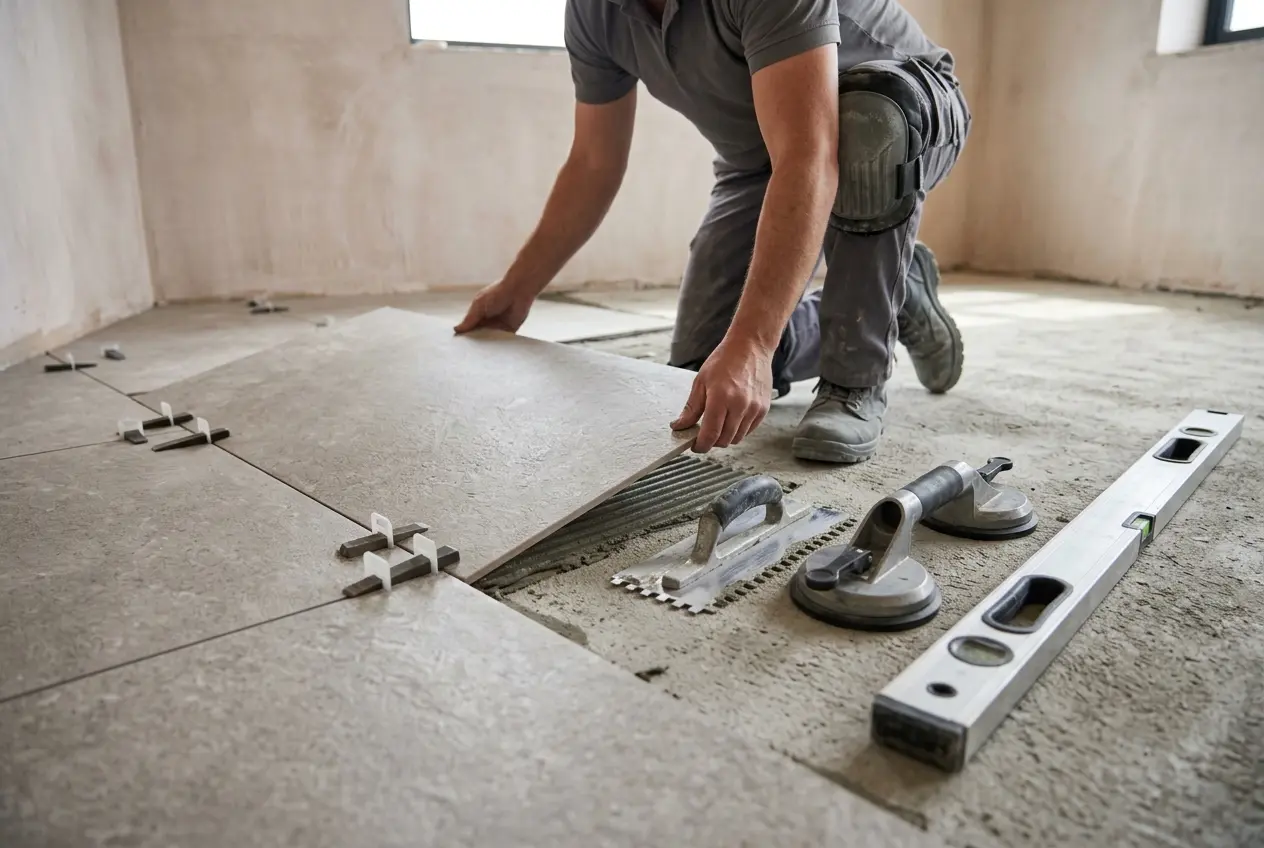
Subway tiles can be used on a floor, but unfortunately, a lot of grout reduces floor cleaning. They don’t get our recommendation for a high-traffic kitchen floor!
Splashbacks: subway tiles take great effect
A splashback removes oil, splatter, and steam behind the cooktop and sink. Subway tiles are unbeatable here. Quick to cut around power points and rangehoods, they are forgiving of an out-of-square wall and offer plenty of wall character with their pattern choices (stacked, brick, herringbone).
Large format splashbacks are desirable on large areas, particularly when fitted with a slab-tiled tile up from the benchtop to the ceiling. Reduces grout and is easily cleaned up. The “catch” is the cost and the precision demanded on walls and power points, etc. Surfaces must be flat, and cut-outs need to be marked precisely.
When you’re upgrading the benchtop, consult with us at the same time for splashback joining so you have colors that match.
How Melbourne homes impact tile styles
Conditions on a local level dictate which tile works, and the generalities don’t necessarily get it.
- Reactive clay soils. A large number of Melbourne suburbs (particularly the south-east) lie on clay which expands and contracts with the seasonal changes. Buildings always move and alter over time. Large format tiles do not flex; they require a strong, flexible adhesive and may require the use of movement joints. If they are tilers, ask them where they are going to go.
- Older homes. Floors in 50s to 70s houses are seldom flat. A problem described as lippage occurs with large format tiles with each edge slightly higher than the next; this is readily visible. Although the leveling will incur some additional overhead, it will save on a poor finish.
- Open plan layouts. Choosing a continuous tile floor ties all the other loose ends together when a wall has been removed. We discussed what to look out for in our article on how to break down a kitchen wall.
- Moisture. However, all kitchens in the vicinity of the sink and dishwasher must be properly waterproofed and grouted correctly regardless of the type of tile used.
What does it cost?
The costs will depend on the particular tile, its dimensions, and installation and preparation requirements. Use these estimates as a guideline, and request written quotes from contractors.
| Item | Typical range |
|---|---|
| Subway tiles (supply) | $25 to $80 per m² |
| Large format porcelain (supply) | $40 to $150 per m² |
| Tiler labor, standard tiles | $50 to $100 per m² |
| Tiler labor, large format | $70 to $130+ per m² |
| Floor leveling | Quoted per job |
However, the cost of laying large format tiles is often higher as they are more difficult to lay due to bigger tolerances and require more manpower. Subway tiles will cost less, but they will take longer because a lot more grout lines need to be finished and there are more pieces to do.
Common mistakes
- Selecting based on an unspecific sample. A small sample does not reveal how a large-scale tile will “read” (perform) across a full room.
- Skipping floor preparation. This is the most common cause of large-format flooring appearing uneven.
- Employing inappropriate dark grout. Subtly conceals stains, but may appear patchy on light-colored subway tile.
- Not remembering the size of the tiles will have an impact on the layout. No pattern that will not fit in the wall leaves thin cuts at the edges.
- Installing the correct amount of tile. Always buy extra for cuts/breakage for future repairs, and buy in the same batch.
- Going for the cheapest quote. It is rare that the very low price comes with waterproofing; there is unlikely to be any leveling and no joints for movement.
How to decide
For a splashback in a smaller-sized kitchen, or if you’re a traditionalist, choose subway tiles. For any rooms that form part of an open plan layout that are trying to get a clean look, then you will see benefits from ordering large format porcelain flooring.
For those in a dilemma, mix them together: A large format floor and the subway tile splashback are a popular mix, and help to keep costs manageable. Thanks to our wall or floor tiling crew, who will be able to advise you on planning.