
Kitchen cabinets are exposed to more moisture than other parts of the house. Common activities around the sink, dishwasher leaks, plumbing issues, or spills can cause water to seep into the joints and edges around cabinets. Once the core material absorbs moisture, swelling, bubbling, warping, and delamination are possible.
Melbourne homeowners can avoid a very costly kitchen renovation if they understand the causes of kitchen water damage. When cabinets are already swollen, the best approach depends on the extent of the moisture and whether the cabinet has been affected enough to destroy its structural integrity.
The cabinetry that we have at Metro Kitchen & Tiles is not just about looks. Choosing suitable materials, fitting them correctly, and securing them in areas prone to dampness can create a viable and pleasing kitchen in the long term.
Why do Kitchen Cabinets Get Swollen?
When water or long-standing moisture is absorbed into an engineered wood core, in general, kitchen cabinets tend to expand. If the water splash doesn't penetrate, it may be okay in small amounts if it's cleaned up quickly, but if it sits around unsealed edges over time, moisture can get inside.
Especially under sinks and around dishwashers, where leaks can go unnoticed until cabinet bases start to sag or doors no longer fit the dishwasher properly. Water damage can also occur when plumbing connections loosen, silicone seals deteriorate, or spills sit against cabinet edges.
Common causes include:
- Leaking sink plumbing or waste connections
- Leftover water from dishes and draining
- Pooling water under the sink
- Unfinished and unsealed cabinet edges and side joints
- Damage to laminate or cabinet finishes
- Excessive exposure to moisture and steam
- Spills that aren't promptly cleaned up
- Poorly sealed areas around sinks and benchtops
So the first piece of advice to prevent damage is to find the moisture source and remove it before working on the cabinet. No matter how this “cosmetic” repair is done, infiltrated wood will not hold.
Comparing the Water Absorption of MDF vs Particleboard
Whether you're looking at MDF vs particleboard, both materials need to be protected from moisture exposure for an extended period; however, their reactions may differ in terms of construction, finish, and severity of exposure.
MDF is produced from very fine wood fibers bonded together with resin, and particleboard is created from wood particles bound together. If a great deal of moisture enters these materials, they may swell and lose structural integrity. After significant swelling, it may be hard or impossible to restore the same dimensions and strength.
For homeowners, the fact that a material may be “better” is the key. Quality cabinet construction, edge protection, installation, and waterproofing are all important. A cabinet kept dry and well maintained will perform well, while even a good-quality cabinet can break down if subjected to a persistent leak.
Are Kitchen Cabinets in Disrepair due to Water Damage Repairable?
Yes; however, not all water damaged kitchen cabinets repair is possible or worthwhile. Damage may range from serious to minor; it's important to evaluate the damage before repairing, replacing a single component, or replacing the cabinet itself.
A repair might be possible if the damage involves the finish, is limited to staining, or is in a small area and doesn't significantly undermine the board's structural integrity. Swollen, soft or crumbling MDF and particleboard products are much more intractable, however.
Warning signs to watch for:
- Only light surface staining and hard cabinet below
- A bubble or lift in laminate
- Swollen cabinet edges
- Soft, “spongy” cabinet bases
- Doors that won't close properly
- Loose or broken hinges
- A worn or warped board
- Persistent musty odours
- Visible mould or extensive moisture damage
If it's still hard and cosmetic problems are the main issue, repairs are a worthwhile option. If the cabinet structure is compromised, replacement is usually a more reliable, long-term solution.
How Can You Protect Cabinets Around Sinks and Dishwashers?
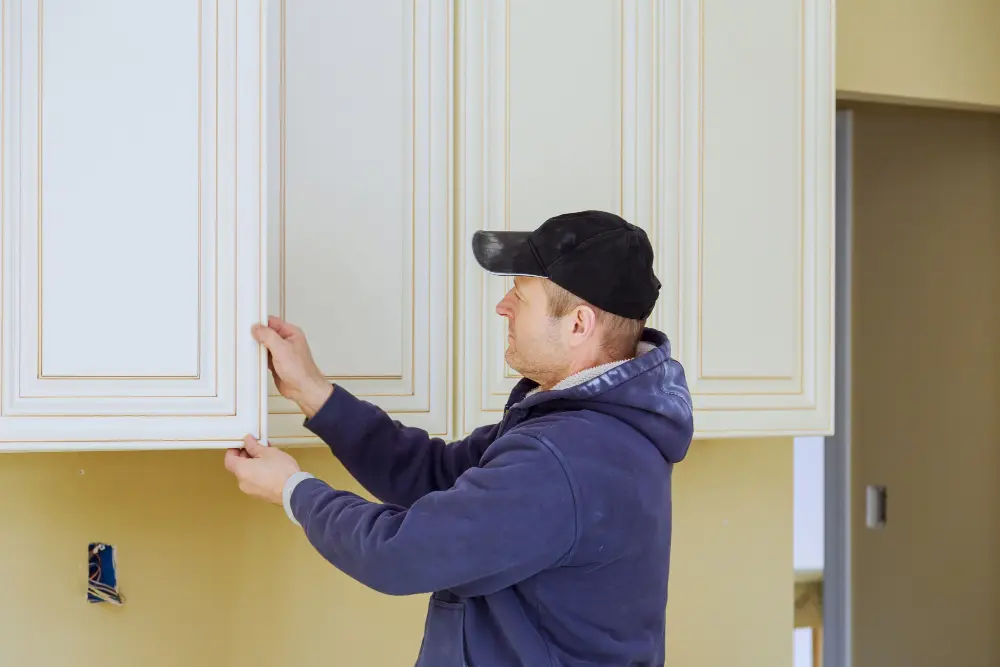
It's much easier to prevent damage than remediate an already wet cabinet. Moist areas such as the kitchen should be carefully designed, installed, and maintained, and should be addressed with particular care.
A water-resistant cabinet lining or appropriate cabinet protection can minimize the impact of incidental spills and moisture on the cabinet, but is not a solution to leakage problems. Proper cabinet installation and surrounding plumbing and wall and floor tiling is still required. If a leak sits behind a wall you plan to open up, check the wall removal checklist first.
Practical approaches to protection include:
- Regularly checking moisture in the cabinet underneath the sink
- Repairing leaking taps, pipes and waste connections as quickly as possible
- Checking dishwasher hoses and connections for leaks
- Keeping cabinet bases dry after spills
- Sealing vulnerable edges where appropriate
- Using silicone seals for better protection around sinks and benchtops
- Applying appropriate moisture-protection lining where moisture is a concern
- Setting up the dishwasher properly and ensuring it's level
- Preventing standing water from accumulating within or near cabinets
These are especially useful during kitchen renovations in Melbourne, as protective treatment can be integrated during fit-out rather than after a water leak occurs.
What Are Some Signs That It's Time to Replace Swollen Cabinets?
Replacement is more acceptable if the cabinet has been compromised due to swelling. A raised finish is quite a different matter than a softening and warping of the cabinet base, which cannot hold the cabinet.
An assessment should include:
- Whether the cabinet materials have permanently swollen
- Whether hinges and fixings are in place and secure
- Whether the cabinet doors and drawers fit properly
- Whether the cabinet has sufficient load-carrying capacity
- Whether the board has deteriorated from mould or prolonged moisture exposure
- Whether the damage is isolated or widespread
- Whether replacement of one cabinet can restore the kitchen effectively
The cost of replacing kitchen cabinets in Australia will vary widely depending on the size, material, structure, decorative and hardware items of the cabinets that require replacement, and the amount of renovation required. Homeowners should consider whether the damage is localized or could be a sign of a moisture issue before replacing every cabinet, and can browse quality cabinet and tile options before deciding on a replacement plan. If you're planning a full kitchen renovation, it's also worth reviewing kitchen power point placement before new cabinets go in.
Customer Story: A Swollen Sink Cabinet in Melbourne
One Melbourne homeowner called Metro Kitchen & Tiles for a quote after noticing the base of their under-sink cabinet swelling. At first she thought that it was just an old cabinet finish.
The next big problem that arose during inspection was a small hole in the plumbing, which meant moisture was accumulating under the sink. The cabinet material had partially weakened from the damage it had already suffered.
Rather than treating the swelling visible on the surface, the plumbing had to be repaired first. Sarah decided to replace the damaged and faulty part of the cabinet and provide better security around the sink. This culminated in an improved storage area that was not only cleaner and more functional but also offered a more effective solution to moisture management.
The lesson: don't just sand and cover when the cabinet or cabinet piece suddenly starts to swell. First, find the source of moisture.
How Metro Kitchen & Tiles Can Help
Selecting the right cabinets will not make a kitchen secure on its own. Accurate measurements, quality cabinet materials, proper installation, and attention to moisture-prone areas all impact long-term performance. Replacing damaged cabinetry is also a good chance to look at the Kitchen Designs Melbourne homeowners are choosing this year.
If you want to upgrade your kitchen, Melbourne homeowners should look for practical cabinetry designs that fit the overall kitchen upgrade plan, alongside expert kitchen tiling Melbourne services. You can replace a broken-down portion of the cabinetry or, if you are going to tear out the cabinetry in your kitchen completely, it has to work for your space and routine.
You shouldn't sacrifice style for functionality when it comes to kitchen decor. Consider these factors all from the start, including cabinet configuration, storage needs, finishes, and moisture protection. Browse our kitchen and bathroom tile categories to find the right materials for a moisture-resistant kitchen. If your drawers are simply hard to open rather than water-damaged, see our guide to kitchen cabinet repairs Melbourne. And if the cabinet boxes are sound but the doors just look dated, read about kitchen cabinet refacing Melbourne. Once repairs are done, our guide to kitchen tile ideas can help you pick a splashback shade that suits your cabinets.